

Baseball fans often hear about stats like batting average or home runs, but one number that stands out in modern discussions is OPS. If you’re wondering what OPS means in baseball, it’s short for On-base Plus Slugging. This statistic measures a player’s overall offensive ability by combining how often they get on base with their power at the plate. It’s become a go-to metric for evaluating hitters because it gives a clearer picture than older stats alone.
OPS matters because baseball is about more than just hits—it’s about creating scoring opportunities. Teams and analysts use it to compare players across eras and positions. Whether you’re a casual fan or deep into fantasy leagues, understanding OPS can change how you view the game. In this article, we’ll break it down step by step, from calculations to real-world examples, to help you grasp why it’s so valuable.
Understanding the Basics of OPS
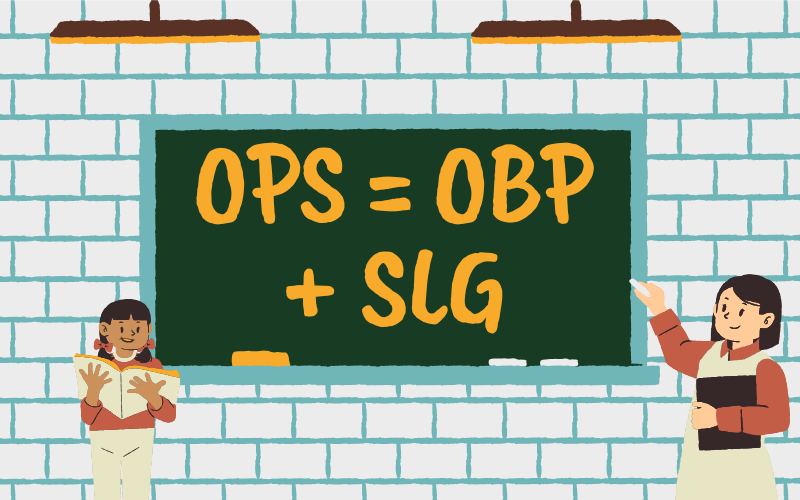
At its core, OPS is a simple addition of two key stats: on-base percentage and slugging percentage. It tells you how effective a batter is at both reaching base and hitting for extra bases. Unlike batting average, which only counts hits, OPS rewards walks, doubles, triples, and home runs.
This metric emerged as part of sabermetrics, the data-driven approach to baseball. It helps quantify a player’s contribution to the team’s offense in one number. For example, a high OPS often correlates with more runs scored. While not perfect, it’s widely used in player evaluations, contract negotiations, and even Hall of Fame debates. Knowing the basics sets the foundation for appreciating its role in the sport.
Related Post: Lumon Meaning And Definition: What Everyone’s Talking About
What is On-Base Percentage (OBP)?
On-base percentage, or OBP, tracks how often a player reaches base during their plate appearances. It includes hits, walks, and times hit by a pitch, divided by total plate appearances (at-bats plus walks, hit by pitches, and sacrifice flies).
The formula is: OBP = (Hits + Walks + Hit by Pitch) / (At-Bats + Walks + Hit by Pitch + Sacrifice Flies).
OBP highlights plate discipline. A player who draws walks avoids outs and sets up scoring chances. League average OBP hovers around .320. Stars like Juan Soto often exceed .400 by being selective. It’s crucial because getting on base is the first step in offense, making OBP a building block for OPS.
What is Slugging Percentage (SLG)?
Slugging percentage, or SLG, measures a batter’s power by calculating total bases earned per at-bat. Singles count as one base, doubles as two, triples as three, and home runs as four.
The formula is: SLG = (Singles + 2×Doubles + 3×Triples + 4×Home Runs) / At-Bats.
SLG focuses on extra-base hits, showing how far a player advances on the bases with their swings. League average is about .410. Power hitters like Aaron Judge can push .600 or higher. It complements OBP in OPS by adding the impact of hard contact, helping distinguish sluggers from contact hitters.
Related Post: What Does WYO Mean? A Complete Guide to the Popular Slang
How to Calculate OPS
Calculating OPS is straightforward: add OBP and SLG together. First, compute OBP and SLG using the formulas mentioned earlier.
For example, if a player has an OBP of .350 and SLG of .500, their OPS is .850.
Let’s walk through a sample. Suppose a batter has 150 hits, 30 walks, 5 hit by pitches, 500 at-bats, 20 doubles, 5 triples, 25 home runs, and 10 sacrifice flies.
OBP = (150 + 30 + 5) / (500 + 30 + 5 + 10) = 185 / 545 ≈ .339
Total bases = 150 – (20+5+25) + (2×20) + (3×5) + (4×25) = 100 singles + 40 + 15 + 100 = 255
SLG = 255 / 500 = .510
OPS = .339 + .510 = .849
This method lets you evaluate any player quickly.
The History Behind OPS
OPS traces back to the 1980s with sabermetrics pioneer Bill James, but it gained traction in the 1990s. Books like “Moneyball” highlighted its value, showing how the Oakland A’s used it to build competitive teams on a budget.
Before OPS, stats like batting average dominated. As analytics grew, OPS became mainstream, appearing on scoreboards and baseball cards. By the 2000s, MLB officially recognized it. Today, with Statcast data, it’s evolved but remains a staple. Its simplicity made it popular over complex metrics, influencing how scouts and GMs assess talent.
Related Post: What Does OD Mean in Slang? Your Full Breakdown
Why OPS is Important in Today’s Game
In modern baseball, OPS helps teams identify versatile hitters who contribute beyond home runs. With shifts and pitching strategies, getting on base matters more. High-OPS players drive offenses, correlating with wins.
Analysts use it for comparisons across parks and eras. For instance, Coors Field inflates OPS due to altitude, so adjustments like OPS+ account for that. It’s key in arbitration and free agency, where players with .800+ OPS command higher salaries. Fans appreciate it for its balance of patience and power, reflecting the game’s evolution toward efficiency.
OPS Compared to Other Baseball Stats
OPS stands out by merging reach and power, unlike batting average (.AVG), which ignores walks. RBI depends on teammates, while OPS is individual-focused.
Compared to wOBA (weighted on-base average), OPS is simpler but weights SLG and OBP equally, though OBP is more valuable. OPS+ adjusts for parks and leagues, making it better for cross-era comparisons—100 is average.
wRC+ is similar but more precise. Still, OPS is accessible and correlates well with run production, making it a reliable shortcut over isolated power (ISO) or BABIP.
Major League Baseball Career OPS Leaders
| Rank | Player | Career OPS | Years Active | Plate Appearances | Notes / Key Achievements |
|---|---|---|---|---|---|
| 1 | Babe Ruth | 1.1636 | 1914–1935 | 10,628 | Widely regarded as the greatest offensive player; revolutionized power hitting. |
| 2 | Ted Williams | 1.1155 | 1939–1960 | 9,792 | “The Splendid Splinter”; exceptional plate discipline and two Triple Crowns. |
| 3 | Lou Gehrig | 1.0798 | 1923–1939 | 9,660 | “The Iron Horse”; consistent power and durability with the Yankees. |
| 4 | Oscar Charleston | 1.0632 | 1915–1941 | ~4,500+ (Negro Leagues est.) | Negro Leagues legend; elite speed, power, and average. |
| 5 | Barry Bonds | 1.0512 | 1986–2007 | 12,606 | Seven MVP awards; record single-season OPS in 2004. |
| 6 | Jimmie Foxx | 1.0376 | 1925–1945 | 9,676 | “Double X”; monstrous power in the 1930s. |
| 7 | Turkey Stearnes | 1.0340 | 1920–1942 | ~7,000+ (Negro Leagues est.) | Negro Leagues star with exceptional slugging. |
| 8 | Mule Suttles | 1.0176 | 1926–1941 | ~6,000+ (Negro Leagues est.) | Power hitter in Negro Leagues and early integrated eras. |
| 9 | Hank Greenberg | 1.0169 | 1930–1947 | 6,097 | Two MVP awards; strong despite military service interruption. |
| 10 | Rogers Hornsby | 1.0103 | 1915–1937 | 9,479 | .358 career average; dominant in the 1920s. |
Legendary Players with Top OPS Records
Babe Ruth tops all-time with 1.164 OPS, revolutionizing the game with power. Ted Williams follows at 1.116, known for discipline. Lou Gehrig’s 1.080 shows his consistency.
Modern greats include Barry Bonds (1.051) and Aaron Judge (1.010 through 2024). In single seasons, Bonds hit 1.422 in 2004. Active players like Shohei Ohtani often exceed .900.
These records highlight how OPS captures legends’ impact, blending average, power, and patience over careers.
Related Post: What Is a Camisole? Meaning, History, and How It’s Worn Today
Drawbacks of Using OPS
OPS isn’t flawless. It treats OBP and SLG as equal, but OBP contributes more to scoring—about 1.8 times SLG’s value. It ignores baserunning, defense, or clutch performance.
Park effects skew it; high-altitude venues boost numbers. Small samples can mislead, as luck influences early-season OPS. It doesn’t adjust for era—dead-ball eras had lower averages.
Critics prefer wOBA or OPS+ for accuracy. Still, for quick assessments, it’s useful, but combine with other stats for a full picture.
OPS for Pitchers: OPS Against
OPS against evaluates pitchers by the OPS of batters they face. Lower is better, showing effectiveness at preventing hits and power.
League average is around .730. Elite pitchers like Jacob deGrom keep it under .600. It highlights command and stuff, as walks inflate OBP and hard contact boosts SLG.
Teams use it for matchups and scouting. Unlike ERA, it focuses purely on batter outcomes, ignoring defense or luck.
OPS in Fantasy Baseball
In fantasy leagues, OPS is a category in some formats, rewarding balanced hitters. Draft players with high OPS potential, like those with .850+ history.
Use it to spot sleepers—check expected OPS from Statcast for underperformers. For example, Vladimir Guerrero Jr. rebounded in 2024 after a low 2023 OPS.
It helps in trades: Swap for high-OPS guys in power categories. Track weekly to adjust lineups, as matchups affect it.
Conclusion
OPS simplifies complex offensive contributions into one stat, making it essential for understanding baseball. From its calculation to real applications, it reveals player value beyond basics. While it has limits, its popularity endures in analysis and fandom.
As the game evolves with data, OPS remains a bridge between traditional and advanced metrics. Next time you watch a game, check the OPS leaders—it might change how you see your favorite players.
Frequently Asked Questions
What does OPS stand for in baseball?
OPS stands for On-base Plus Slugging, a stat that adds on-base percentage to slugging percentage to measure a hitter’s overall performance.
How is OPS different from batting average?
Batting average only counts hits per at-bat, while OPS includes walks and extra-base power, giving a fuller view of offensive ability.
What is considered an elite OPS?
An OPS over 1.000 is elite, achieved by top players like Babe Ruth or modern stars in peak seasons.
Can OPS be used for pitchers?
Yes, as OPS against, which measures the OPS of batters facing the pitcher—lower numbers indicate better pitching.
Why do some prefer OPS+ over OPS?
OPS+ adjusts for ballpark and league effects, allowing fair comparisons across teams and eras, with 100 as average.
FOR MORE MEANINGS VISIT: MEANZHUB